
Astrology and Spiritual Guidance

Reconnect With an Ex | Spiritual Love Guidance in Surrey

Steps Toward Positive Energy and Success

How to Deal With Relationship Trust Issues: Partner Loyalty Guidance in Canada

Trust is one of the most important parts of a healthy relationship. When doubts, insecurity, or past experiences make it difficult to trust a partner, even a strong relationship can feel uncertain. Pandit Psychic understands that relationship trust issues can be emotionally difficult, especially when you are unsure whether your concerns come from real warning signs or fear. With patience, honest communication, and a clear understanding of your emotions, you can begin to handle trust issues in a healthier way.

01

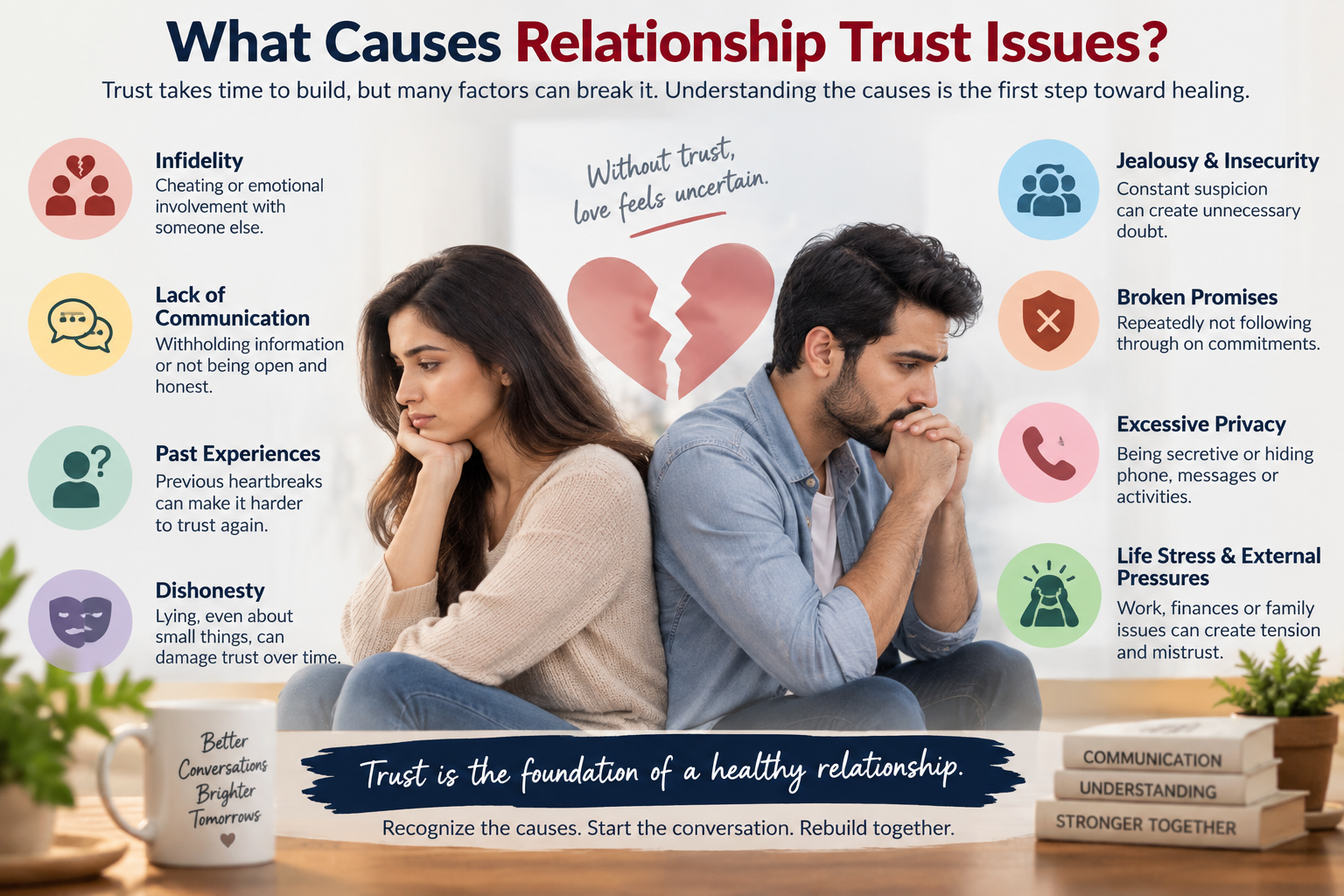
What Causes Relationship Trust Issues?


Trust issues can develop for many reasons. A previous relationship may have ended because of dishonesty or infidelity, or you may have experienced broken trust within your family. Sometimes, a lack of communication in a current relationship can also create uncertainty.
Common causes include:
* Past cheating or betrayal
* Poor communication between partners
* Fear of abandonment
* Low self-confidence or insecurity
* Secretive behavior
* Different expectations about commitment
Long-distance relationship challenges
Understanding the source of your concerns is an important first step. Not every feeling of suspicion means that your partner is being disloyal.
02

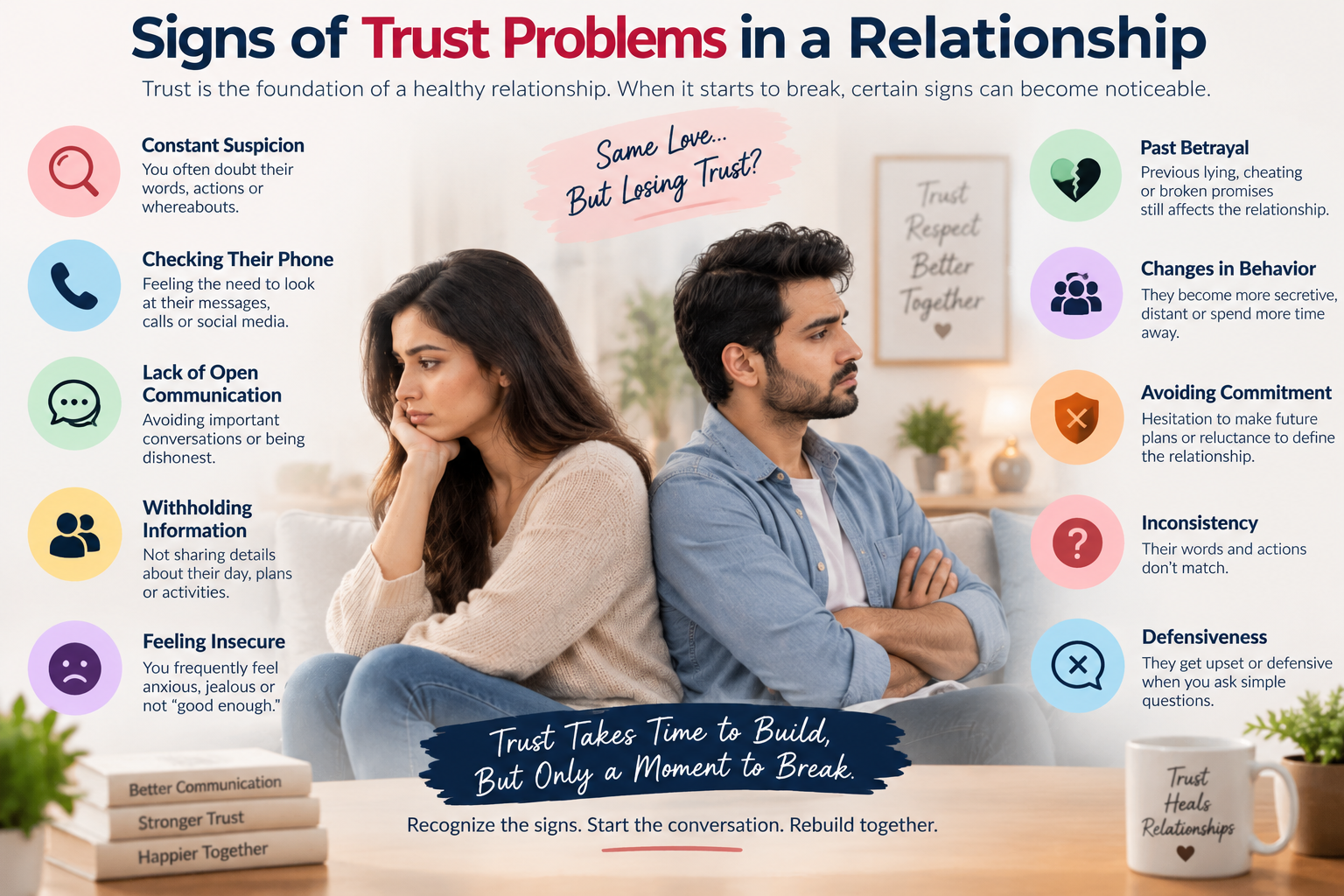
Signs of Trust Problems in a Relationship

Relationship trust issues can appear in different ways. You may constantly question your partner's actions, feel uncomfortable when they spend time with other people, or repeatedly check their phone and social media.
Common Signs to Notice
* Frequently worrying about your partner's loyalty
* Asking for repeated reassurance
* Becoming jealous over ordinary interactions
* Finding it difficult to believe what your partner says
* Avoiding emotional conversations
* Assuming the worst without clear evidence
These behaviors can create tension. Instead of immediately accusing your partner, take time to understand what is triggering your reaction.

03

How to Deal With Relationship Trust Issues

1. Communicate Without Accusations
Choose a calm time to talk. Explain how you feel instead of making statements that blame your partner. For example, saying, “I feel uncertain when we do not communicate for long periods,” can open a conversation more effectively than an accusation.
2. Separate Feelings From Facts
A feeling of suspicion is real, but it does not automatically prove that something is wrong. Ask yourself:
* What do I actually know?
* What am I assuming?
* Is there a clear pattern of behavior?
* Could my past experiences be affecting my current relationship?
This simple reflection can prevent unnecessary arguments.

04

Set Healthy Relationship Boundaries

Healthy boundaries help both partners understand what feels respectful and comfortable. Discuss expectations around friendships, social media, communication, privacy, and commitment. Boundaries should be mutual rather than controlling. Trust grows when both people understand and respect each other's needs.
4. Rebuild Trust Gradually
If trust has already been damaged, rebuilding it takes time. Consistent actions matter more than promises. Both partners can work toward greater trust by being honest, keeping commitments, communicating clearly, and acknowledging mistakes.

05

Understanding Partner Loyalty

Partner loyalty is not simply about avoiding infidelity. It can also involve honesty, emotional respect, reliability, and supporting the relationship during difficult periods.If you are worried about partner loyalty, look at your partner's behavior over time rather than focusing on one isolated incident. Open communication can help clarify misunderstandings before they become larger problems.
When Should You Seek Outside Guidance?
Some relationship concerns are difficult to handle alone. If conversations repeatedly turn into arguments, professional relationship counseling may provide a neutral space for both partners.Spiritual or personal guidance may also help some people reflect on their emotions and relationship concerns. However, such guidance should complement honest communication and practical decision-making rather than replace evidence or professional support when needed.

`

Conclusion

Dealing with relationship trust issues requires patience, honesty, and self-awareness. Whether your concerns come from past experiences or difficulties in your current relationship, taking time to separate feelings from facts can help you respond more thoughtfully. Healthy communication, mutual boundaries, and consistent actions can create a stronger foundation for partner loyalty and emotional security. If you would like to explore personal or spiritual guidance for your relationship concerns, Contact Us to learn more about the available guidance options.

Frequently Asked Questions

Past betrayal, insecurity, poor communication, jealousy, and fear of abandonment are common causes of trust problems.

Consider whether your current partner has given you clear reasons for concern or whether similar fears appeared in previous relationships. Self-reflection can help identify patterns.

Yes, some relationships can rebuild trust through honesty, accountability, consistent behavior, patience, and open communication.

Checking a partner's private messages without consent can damage trust further. A direct and respectful conversation is generally a healthier starting point.

Consider professional support when trust problems continue despite honest conversations or when repeated conflict makes it difficult to communicate constructively.